
January 21, 2026
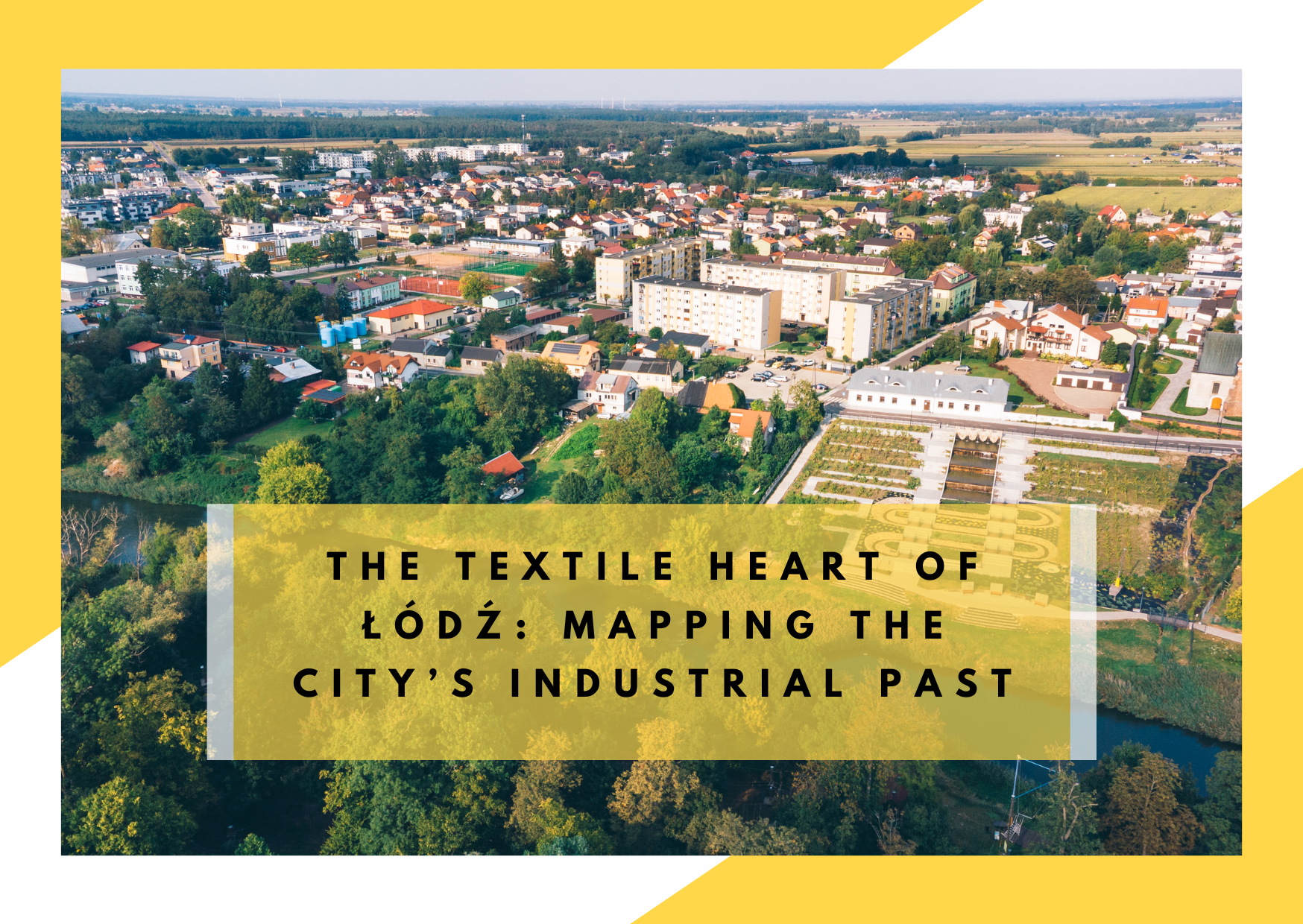
The Textile Heart of Łódź: Mapping the City’s Industrial Past
Łódź is the third largest city in Poland, a status that derives from its long history of textile manufacturing that began in the 19th century during the Industrial Revolution. The city was chosen by many industrialists and businessmen as the ideal place to invest in new factories equipped with the latest technologies and machines.
These new investments proved highly profitable, and Łódź quickly became the perfect spot to build over 200 factories across the city, mostly specializing in textiles and cotton manufacturing. This economic boom attracted thousands of new workers from Poland, Germany, and Russia who came in search of better jobs. The city became known as the “Polish Manchester,” named after the red-brick industrial architecture that could be seen everywhere.
3 important names for the industrial revolution
Three people were particularly important for the industrial development of the city: Karl Wilhelm Scheibler, Izrael Poznański, and Henryk Grohman. These three manufacturers built the largest and most influential factories in Łódź.
The most famous complex is Manufaktura, built by Izrael Poznański. It was not just a factory, but an entire industrial city, including workers’ houses, a hospital, a school, a community center, and a canteen for thousands of employees. Today, the site is one of Łódź’s main tourist attractions, home to the Poznański Palace, as well as a large shopping mall, restaurants, and cultural venues.
Karl Wilhelm Scheibler was another key figure in the city’s industrial growth. His factory became the most productive and profitable in Poland by the late 1800s. Born into a wealthy textile family, Scheibler studied textile production in Belgium, worked in Germany, and later moved to Poland to build his empire. His main complex was located in the Księży Młyn district, a self-contained industrial settlement that included housing and services for workers. The buildings are still in use today, redesigned as university facilities, museums, shops, and restaurants.
Henryk Grohman, a member of the Grohman family, took over his family’s spinning mill near the Lamus River and renovated it in a Neo-Gothic style, introducing new technologies that made the business thrive. He also built a Renaissance-style palace for his family. The complex now belongs to the city, and since 2011 it has been redeveloped into offices and exhibition spaces. Today, it serves as the headquarters of the Łódź Special Economic Zone.
A metal statue on Piotrkowska Street commemorates these three influential figures, showing them seated together at a table, a lasting reminder of the city’s industrial past.
Business in Łódź flourished until World War II, when many factories suffered from raids, production changes, and severe economic damage. After the war, most industrial areas never regained their former success, and many large buildings were left abandoned for decades.
The three biggest plants were located in the districts of Manufaktura, Źarki, and Księży Młyn (Wincentego Tymienieckiego). Other factories could be found in Stare Polesie, Fabryczna, south of Piotrkowska Street, and Monopolis, among many others scattered throughout the city.
Cultural Heritage and Identity
The industrial era not only shaped the economic development of Łódź but also left a profound cultural and social legacy. During the 19th century, the city became a melting pot of different nationalities, cultures, and religions. Poles, Germans, Jews, and Russians lived and worked side by side in the rapidly growing textile districts. This multicultural environment created a unique urban identity that can still be felt today in the city’s architecture, cuisine, and way of life.
The mixture of traditions gave rise to a vibrant cultural scene — synagogues stood near Lutheran and Orthodox churches, while schools and theaters reflected the linguistic and artistic diversity of the community. Many writers, artists, and filmmakers have since drawn inspiration from this cultural blend, portraying Łódź as a city of contrasts, where beauty and hardship coexisted within the same red-brick walls.
Even after the decline of the industry, this multicultural spirit did not disappear. It evolved into a new kind of creativity that defines modern Łódź: design studios, film production, and street art now occupy the same spaces that once echoed with the sound of looms. The city’s red-brick factories are not just remnants of the past, but living monuments that connect generations and remind citizens of the determination, cooperation, and resilience that built the city.
Łódź stands today as a symbol of transformation and resilience. From its 19th-century industrial boom to its post-industrial rebirth, the city has continuously reinvented itself while preserving the traces of its rich past. The old factories, once filled with the rhythm of spinning machines, now host art galleries, museums, restaurants, and creative spaces — proof that history can be reimagined rather than forgotten.
The legacy of figures like Scheibler, Poznański, and Grohman lives on not only in the buildings they constructed but also in the spirit of innovation that still defines Łódź. Walking through the streets of the “Polish Manchester,” one can feel the powerful connection between heritage and progress — a city that continues to weave its future from the threads of its remarkable past.
Read all the articles conected to the project ” Odkryj Łódź” : https://levelupngo.com/project/odkryj-lodz/
Author: Giovanni Luise
Edited by Francesca Pengo