
February 23, 2026
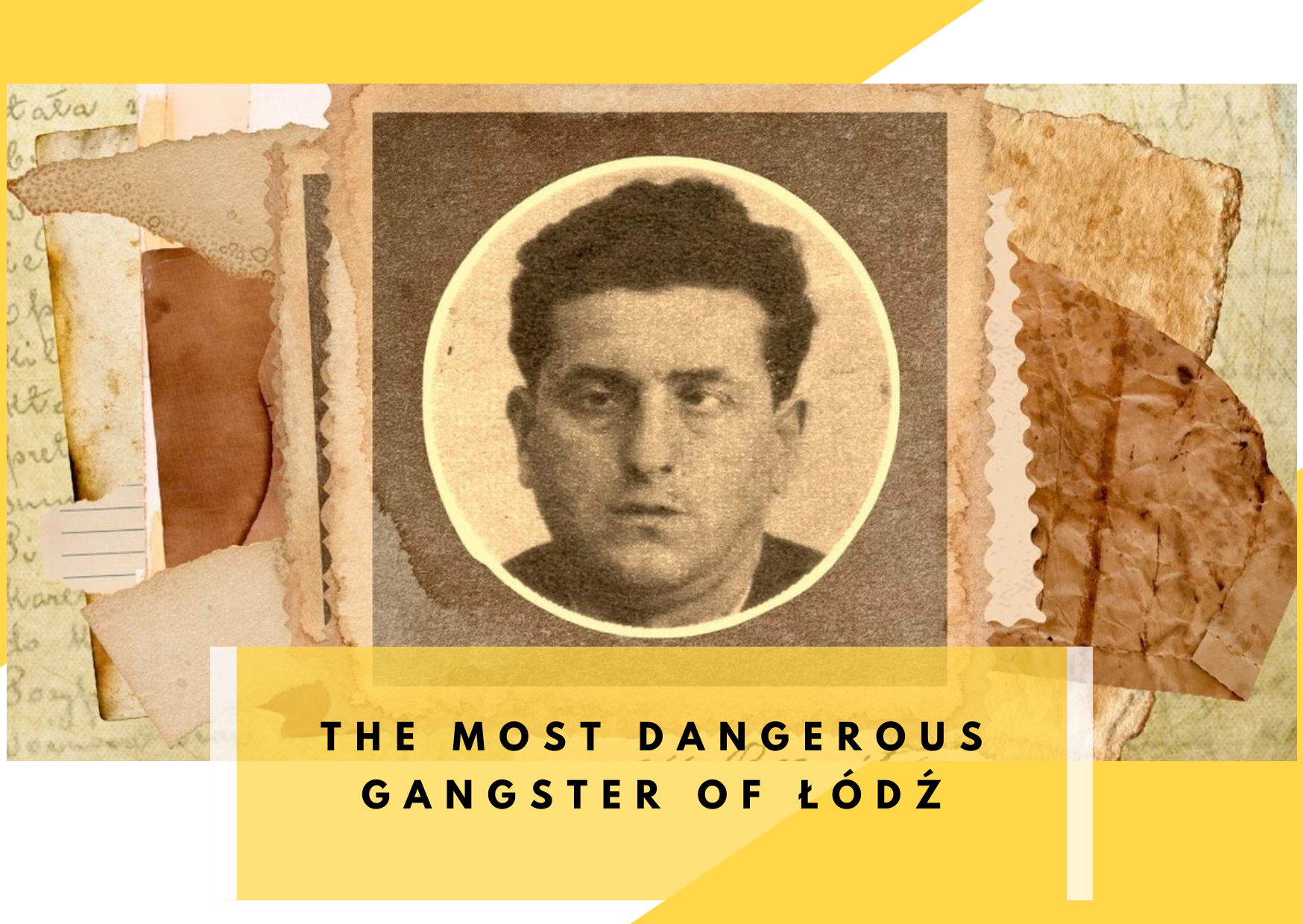
If you stroll through Bałuty today, you see courtyards, markets and blocks of flats like in many other Polish cities. A hundred years ago, however, this district was the kingdom of one of Łódź’s most feared, and later most legendary, gangsters. His name was Menachem Bornsztajn, but everyone knew him as Ślepy Maks, the “Al Capone of Łódź”. His story goes beyond crime: it reflects poverty, power and the thin line between history and myth.
Łódź and Bałuty: a city growing too fast
At the beginning of the 20th century, Łódź was one of Europe’s fastest-growing industrial cities. Factories expanded rapidly and workers arrived from villages and abroad. Poles, Jews, Germans and Russians lived side by side in a booming but deeply unequal city.
Behind the impressive industrial growth, districts like Bałuty struggled with overcrowded housing, unstable jobs and poverty. During World War I, Bałuty even functioned briefly as a separate administrative unit, sometimes called the “Republic of Bałuty”. In this unstable environment, official control was weak and informal “street laws” often replaced state authority. In such conditions, it was easier for local strongmen to gain power.
The rise of Ślepy Maks
Born in 1890, Menachem Bornsztajn moved to Łódź as a child and grew up in Bałuty. After losing his father, reportedly due to a police beating, he had to survive on his own. As a teenager, he was drawn into petty crime by a dealer in stolen goods.
He later lost sight in one eye, earning the nickname “Ślepy Maks” (“Blind Maks”). Over time, he became a powerful figure in the local underworld. He organised robberies, controlled parts of the district and built a loyal circle around him. Violence and intimidation were central to his reputation.
Interestingly, he also led the so-called “dintoyra”, a criminal association inspired by traditional Jewish arbitration courts, which functioned as a kind of thieves’ court. This added another layer to his authority and influence.
Between fear and legend
Police records describe a dangerous criminal involved in robberies and extortion. Yet local stories paint a more complex picture. According to urban legends, Ślepy Maks followed a personal “code”: loyalty to his gang, protection of “his” streets, and occasional help for poorer residents.
Historians note that much of this “Robin Hood” image developed later. As time passed and direct fear disappeared, journalism and popular culture turned him into a colourful symbol of old Łódź. Eventually, people found it easier to romanticise the past, forgetting the real victims.
The end of the story
Ślepy Maks was arrested and sentenced several times. Eventually he left Łódź. During World War II he was imprisoned by the Nazis, and after the war he emigrated to Israel, where he died in 1957.
His life shows how poverty, discrimination and lack of opportunity can push people toward crime – without justifying their actions. It also reveals something about Łódź itself: cities produce not just factories and wealth, but stories too. And sometimes, these stories turn criminals into legends.
If You want to know more about The city during this century: https://levelupngo.com/the-textile-heart-of-lodz-mapping-the-citys-industrial-past/
Read all the articles connected to the project ” Odkryj Łódź” : https://levelupngo.com/project/odkryj-lodz/
To take a look at our blog: https://levelupngo.com/blog-2/
Author: Laura Potini