
September 7, 2025
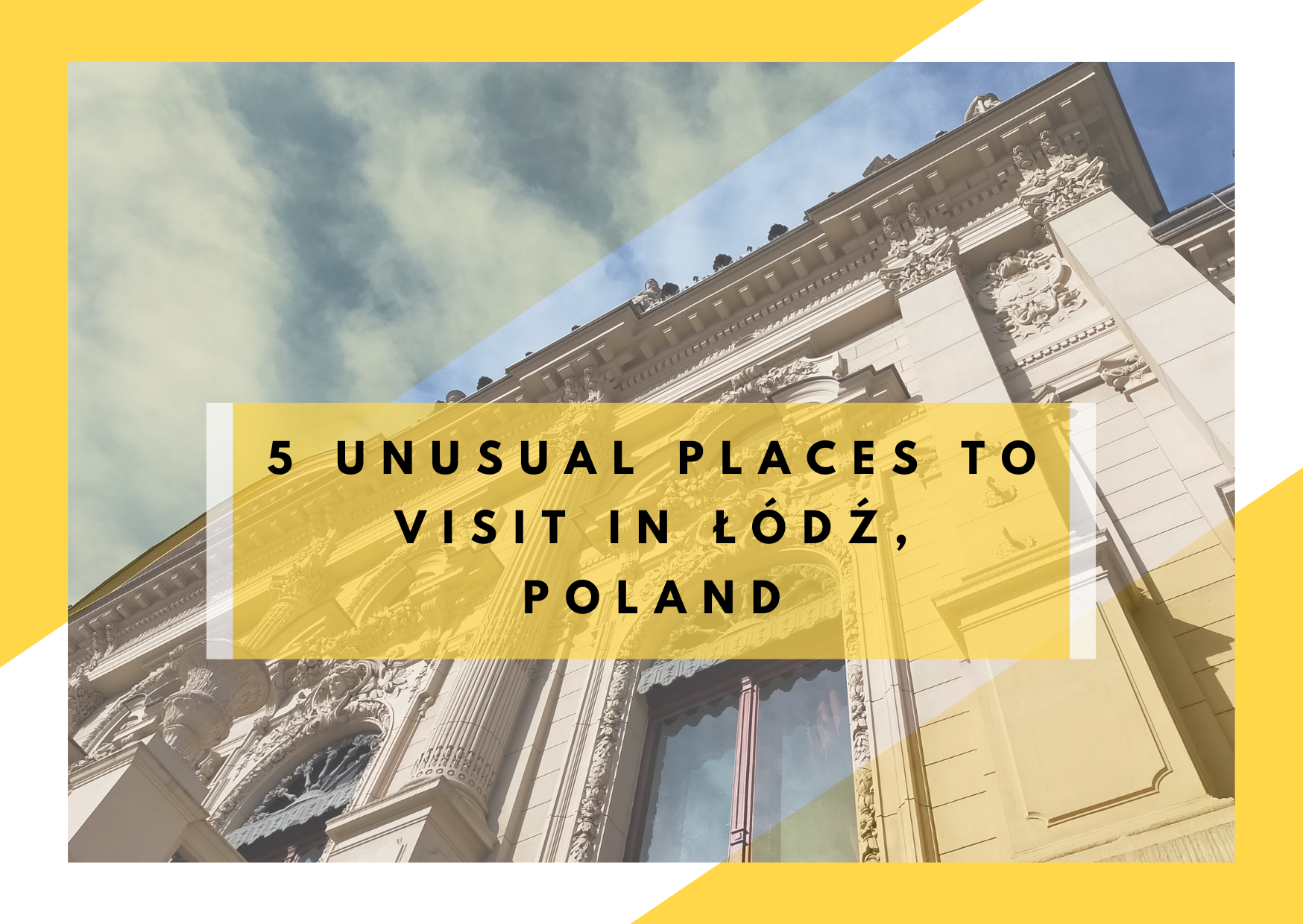
Warsaw and Kraków frequently take center stage when people are considering Polish places to visit. However, Łódź (pronounced “woodge”) is a grungy, artistic, and magnificently strange gem hidden away in central Poland. This post-industrial city is so alluring because it doesn’t strive to be beautiful.
Once dubbed the “Polish Manchester” due to its thriving textile industry, Łódź has reimagined itself as a creative canvas, where avant-garde art meets deteriorating factory walls, where history lingers in the ruins, and where every alleyway whispers a story.
Outside of the well-known Piotrkowska Street and the famous Manufaktura complex, Łódź has a wealth of unique, odd attractions that most visitors overlook. Let’s visit five of the city’s
most quirky and intriguing locations, ideal for photographers, urban explorers, and inquisitive thinkers.
1. Muzeum Neonów Łódź, the Neon Museum
📍
ul. Piotrkowska 102, inside OFF Piotrkowska
Located in the center of the artsy OFF Piotrkowska complex, Łódź has its own underground version of the well-known Neon Museum in Warsaw, which you may have heard of. It feels like a neon jungle growing naturally out of the surrounding industrial brick walls; this mini-museum is not hidden behind glass panels.
Previously, government buildings, stores, and movie theaters were decorated with these bright remnants of the Soviet era. As relics of a past time, they now shine brightly, providing a nostalgic yet rebellious radiance.
Unusual Aspect: A luminous cemetery of communist-era signs revived — a photographer’s paradise and a design enthusiast’s paradise.
2. Radegast Station (Stacja Radegast)
📍
al. Pamięci Ofiar Litzmannstadt Getto 12
https://muzeumtradycji.pl/oddzial-stacja-radegast/
Radegast Station is one of Łódź’s most somber and historically significant sites. During World War II, when the city was renamed Litzmannstadt under German occupation, this unassuming railway station became a gateway to tragedy. From here, thousands of Jews imprisoned in the Łódź Ghetto were deported to Nazi extermination camps, including Chełmno and Auschwitz.
Today, the station has been transformed into a memorial and museum, but it has retained its raw authenticity. The wooden loading platforms, original tracks, and preserved freight cars remain — silent witnesses to the horrors of the Holocaust. Inside, you’ll find exhibits documenting the history of the ghetto, personal stories of its inhabitants, and haunting lists of names etched in stone.
Walking along the platform is an intense, reflective experience — there’s a heavy stillness in the air, as though the place itself remembers. For many visitors, the absence of tourist crowds makes the visit even more personal and poignant. It’s not a “fun” stop, but it’s an essential one for anyone seeking to understand Łódź beyond its architecture and art scene.
Unusual Aspect:A preserved deportation station turned into a powerful memorial, where untouched surroundings and historical exhibits confront visitors with the weight of the city’s wartime past.
3. The Bookstore in a Tram (Antykwariat Tramwaj)
📍
Near Piotrkowska 138
If you blink, you might pass this old red tram, which is silently parked along Piotrkowska Street, the main thoroughfare in Łódź, and appears to be waiting for passengers from a bygone era. When you enter, you are taken to a cozy, vintage bookshop on rails rather than to another station on the train.
Narrow but charming, the room has rows of wooden shelves that curve with the walls of the tram, and the metallic taste of its original fittings blends with the subtle smell of old paper. Little pockets of reading light are created as sunlight streams in through the tram windows and catches the gold lettering on book spines.
This is a place to find books, not merely purchase them. Broken poetry anthologies, oddball foreign novels, well-worn Polish classics, and the occasional out-of-print gem you didn’t realize you needed can all be found there. The proprietor, who is frequently spotted reading a book behind the counter, is pleased to talk or offer suggestions if you’re interested.
The tram has a history of being a part of Łódź’s public transportation system and has been repurposed and kept with love. These days, it transports ideas, memories, and a subdued nostalgia rather than people.
Unusual Aspect: A mobile reading haven that combines history of public transportation, nostalgia, and bookworm paradise.
4. Księży Młyn: The Ghost Factory District
📍
Around ul. Tymienieckiego
Księży Młyn, formerly the center of Łódź’s textile empire in the 19th century, is now one of the city’s most atmospheric neighborhoods and a living reminder of its industrial past. Industrialist Karol Scheibler constructed it mostly in the late 1800s, but it was more than simply a collection of manufacturers; it was a whole self-sufficient complex that included worker housing, schools, shops, and even a fire station. Imagine it as a Polish heartland version of a Victorian company town.
Many of its tall red-brick mills are now silent, their ivy-covered walls and broken windows making for a dramatic setting. While some buildings have been meticulously refurbished to become chic lofts, art studios, and boutique cafes, others have remained eerily unaltered, providing urban explorers with the excitement of traveling back in time. There are enormous murals nestled between decaying buildings, cobblestone streets, and secret courtyards to explore.
The juxtaposition of rusty metal staircases, manufacturing smokestacks, and contemporary art installations all coexist in one picture, creating an irresistible contrast for photography enthusiasts. If you’re lucky, you might find a pop-up gallery or open-door art event in one of the historic hallways.
Unusual Aspect: A post-industrial wonderland where the ghosts of 19th-century textile workers mingle with the city’s present-day artists — half-forgotten ruins reborn as a cultural playground.
Pro Tip: Visit during golden hour for the most dramatic lighting on the brick facades. Start at ul. Tymienieckiego then meanders toward Art_Inkubator or Fabryka Sztuki (Factory of Art) to see how these historic spaces are being transformed.
5. Museum of Cinematography (Muzeum Kinematografii)
📍
pl. Zwycięstwa 1
The Museum of Cinematography in Łódź is a hidden gem for cinephiles and culture seekers. Housed in the lavish 19th-century Scheibler Palace, once the residence of textile magnate Karol Scheibler, the building itself is worth a visit. With its ornate ceilings, creaky
staircases, and velvet curtains, the palace feels more like a movie set than a traditional museum — the perfect backdrop for a deep dive into Poland’s cinematic history.
Inside, the museum celebrates Poland’s role in global cinema, showcasing everything from the earliest film equipment to modern-day production techniques. Exhibits include vintage cameras, projectors, costumes, posters, and film reels. The displays aren’t just technical — they’re immersive, allowing visitors to experience the evolution of film through hands-on installations, reconstructed sets, and even interactive screenings.
One of the highlights is the section dedicated to Se-ma-for Studios, the legendary Łódź-based animation house that produced Oscar-winning stop-motion films such as Tango and Peter and the Wolf. Fans of animation will love seeing the original puppets and miniature sets, many of which feel oddly alive under the museum’s moody lighting.
The museum also emphasizes Łódź’s status as the birthplace of Polish cinema, since the renowned Łódź Film School trained filmmakers such as Krzysztof Kieślowski, Andrzej Wajda, and Roman Polański. Tourists understand why Łódź is frequently referred to as Poland’s “HollyŁódź.”
Unusual Aspect: A velvet-draped palace transformed into a cinematic treasure chest, where aristocratic décor collides with the magic of puppets, projectors, and Polish film legends.
In Summary
The city of Łódź embraces its flaws rather than trying to hide them. It is like looking through a photo album of Poland’s past and future merging as you stroll through its streets: neon signs shining against worn walls, red-brick factories transformed into art spaces, and secret courtyards teeming with innovation and color. Łódź is rough, experimental, and refreshingly honest, and it lives on imperfection, unlike the charm of Kraków or the grandeur of Warsaw.
Its capacity to recreate itself while retaining its wounds is what makes it so intriguing. Rather than being forgotten, the city’s industrial legacy has been recreated into something new. For example, a ghost factory has been transformed into a cultural center, a palace has been transformed into a movie museum, and a tram has been transformed into a bookstore. Every alley conceals a surprise, and every corner seems like a canvas.
Łódź has a wealth of discoveries for those that enjoy urban exploration, unusual excursions, or immersive cultural encounters. It’s a place where you can roam aimlessly and still find something remarkable, like a pop-up art piece, a secret mural, or an oddball café nestled inside a converted warehouse.
Bring time to get lost in addition to a camera. Curiosity is rewarded by Łódź; the more you explore, the more secrets it discloses.
Therefore, avoid the typical tourist route if you’re looking for a city that feels unfiltered, genuine, and creatively vibrant. You’ve never been somewhere like Łódź, which is waiting for you.
Read all the articles conected to the project ” Odkryj Łódź” : https://levelupngo.com/project/odkryj-lodz/
Author : Eunice Ndungu